Bethlem Royal Hospital was one of the Western World’s first hospitals that we would now define as an ‘asylum’ for mental illness. The deeply inhumane conditions of this hospital shortened to the name ‘Bedlam’ were so infamous that bedlam entered our lexicon as synonymous with mayhem and madness. Patients at Bedlam included some that were stripped naked, allowed to become filthy and were chained with some other patients in damp and dark stone cells. This very dark origin of institutional treatment forms an image we have thankfully not seen in mental health hospitals for at least a century.
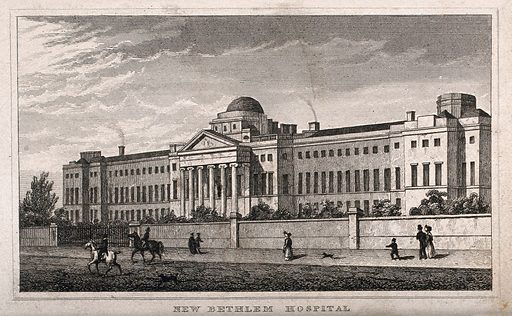
We still see the legacy of the original asylums permeate and decay our modern ‘places of healing’. Chemically restraining patients with sedatives and anti-psychotics is the modern equivalent of chaining patients to walls. It appears a lot more humane because it is hard to see how it feels to be physically and mentally unable to exercise free will due to high doses of psychotropic drugs.
Those with no direct or indirect experience of psych wards may also be surprised to know most wards still physically and mechanically restrain troublesome patients. Mechanical restraint uses belts, harnesses, sheets or straps around the patient’s body to restrict their movement. Physical restraint is also usually permitted with workers holding down patients justified by potential or perceived risk of harm to themselves or others. Public relations departments and politicised media releases often claim to be reducing or eliminating these restrictive practices but we are a long way from evolving away from these old ways of working.
Patients get aggressive and this is a risk to be managed. It is also a risk that can be reduced through better prevention and more widespread fostering of empathy, compassion and quality care to these settings. Patients are rightfully angry when there are long waiting times to be admitted to a ward, frustrating ward routines, bland food, difficult interactions between patients and clinical use of involuntary treatment and coercive control. Anger does not need to turn to aggression. The causes of this anger need to be better understood and addressed from the ward cleaner all the way to hospital executives and each board of directors.
A zero tolerance to aggression policy is still an important aim. The policy must equally apply to the passive aggressive strategies of many psych ward staff. As well as chemical and physical restraint, mental health systems still frequently punish the troublemaker patients in seclusion areas. These are not like how we imagine solitary confinement in prisons but when you are alone with your anger, distress or paranoia, these small rooms are still highly traumatising.
The old ways of running an asylum were made obvious to any visitor and to inspectors like those who were alarmed when they visited Bedlam. The new ways of restricting and ignoring patients are much more insidious. By wrapping up restrictive practice and cold clinical approaches to treatment in the new language of recovery, mental health systems have built a powerful facade. This is often a facade within hospitals where in other wards lives are being saved and doctors and nurses are rightly portrayed as heroes. Over in the psych wards though, shattered lives of mental health patients are further shattered or remain overly fragile.
Deinstitutionalisation throughout the 1960s and 1970s in countries such as the United Kingdom and Australia brought home to the monotony and coercion of long-term hospitalisation of those with chronic mental illness. The deinstitutionalisation movement saw many benefits for those long-term mental health patients who were encouraged out of psych wards and properly transitioned into the community. Tragically though, many of these long-term patients were then mistreated back in their family homes or new semi-independent living.
Almost all patients live better lives if they avoid long stays in hospital. This is not the case when patients are just dumped back to the same stressors that brought them to hospital in the first place. Deinstitutionalisation did include funding of community-based services but the challenges of adequate housing and access to suitable employment cannot not be solved by health services reorienting from hospitals to community visits. For many psych wards today, the impetus to discharge patients as quickly as possible might be justified as fostering community-based care but is really about reducing costs, pleasing politicians with better metrics like the average length of stay and shifting risk to unpaid carers and community organisations. Passing the buck and unreasonably shortening admissions leads to readmissions or refusing admissions.
Hospitals are still at the centre of the ‘deinstitutionalised’ system. Keeping well enough to stay out of hospital is a noble goal albeit one fuelled by traumatising and retraumatising admissions. The modern asylum looks nice at first glance, appears comfortable and presents itself as a progression from the dark and deteriorating buildings of old. Those who visit see the newer facilities and performative staff to portray patients as ‘entitled’ or ‘unwell’ for complaining about mistreatment. This is the most insidious nature of newly-constructed facades as they gaslight patients into looking ‘crazy’ for complaining about services in the expensive buildings they are forced to inhabit.
The pandemonium, mayhem, confusion and unrest that are synonymous with ‘bedlam’ are still appropriate descriptors of the modern version of Bedlam Hospital. The chaos of psych wards is now usually well masked by overmedicating patients, disciplining with coercion or passive aggression, and constructing impressive-looking buildings for new wards. The practice of restraining and secluding patients is still very common but usually obscured from visitors.
The coercion and punitive measures of the first asylums have been repackaged and reinstituted throughout psych wards in the Western World. Even well-meaning clinicians and administrators believe they are ‘continuously improving’ toward a less restrictive and more recovery-focused system. As soon as a patient angrily resists or a carer formalises a complaint, the system reverts to using risk management to justify cruelty and rob patients of freedoms or rights. Apparent efforts to ensure safety come at the expense of quality and care by using seclusion, restraint, and cancellation of rights to have leave to go outside are all severe forms of incarceration that are subjectively enforced with no attempt to explore other ways to motivate patients to progress their own recovery in healthy ways.
Next Madness Post: Neoliberalism and trickle-down toxicity


1 Pingback